
Post-Dictator Tourist
Visting Budapest after Orbán.

Author’s note:
I don’t paywall my writing. This newsletter is about inclusion and connection, and gating articles would go against that ethos. That said, writing is my livelihood, so if you appreciate my work, consider becoming a paid subscriber. The more I earn here, the more time I can devote to this newsletter.
If you’re new here and appreciate this post, consider becoming a free subscriber. You can always unsubscribe with a click later. If you need to know a little more about the newsletter or my credentials first, take a look at my About Page. Free subscriptions also help because they expand my audience and improve my ranking.
Thank you for reading.
— Pablo
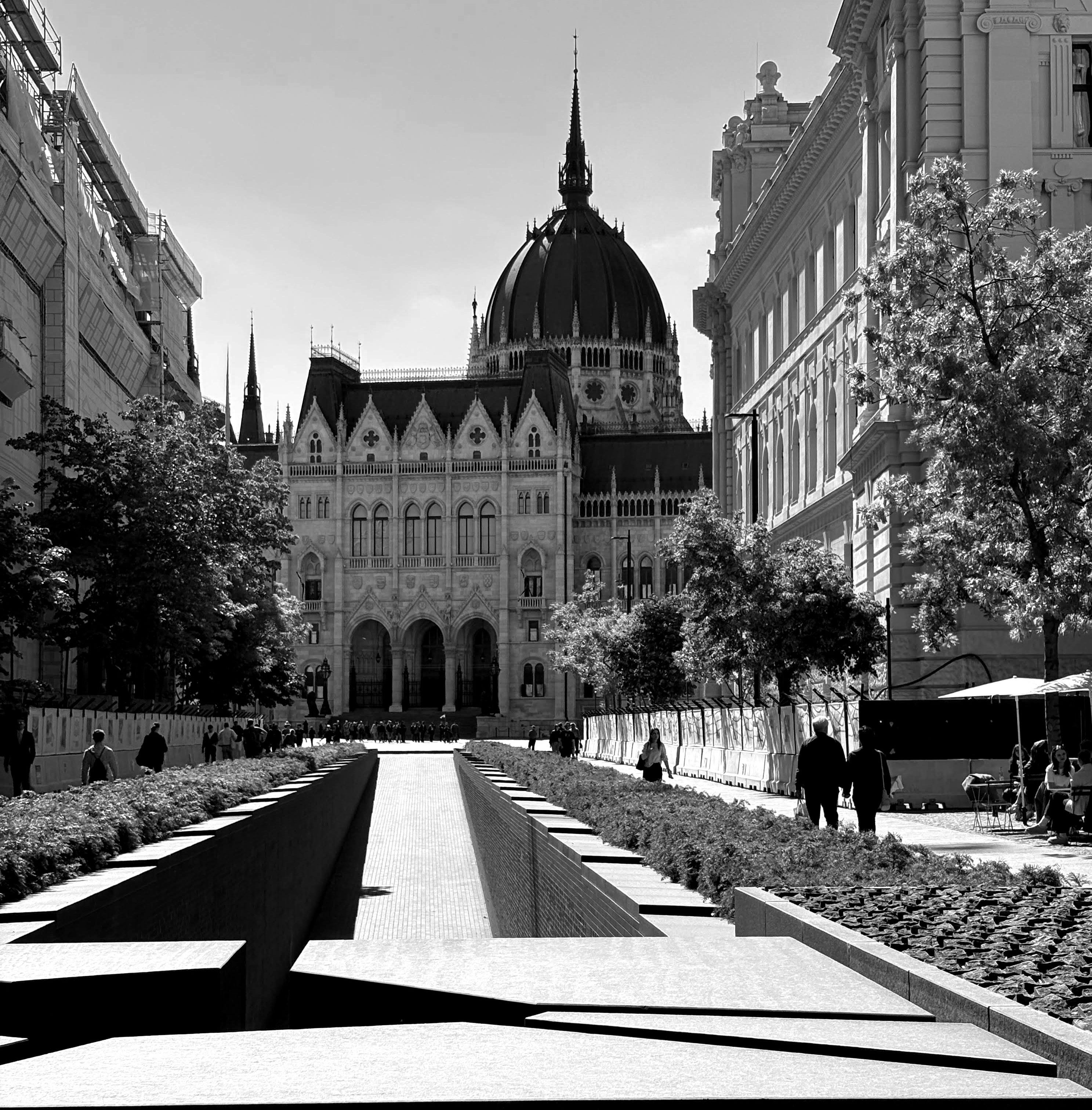
This week, my wife and I visited Budapest, three days after Péter Magyar, Hungary’s new prime minister, took his oath of office, ending Viktor Orbán’s 16-year rule.
I was curious to see what Budapest would be like after Orbán, widely considered to be an autocrat who systematically dismantled the guardrails of democracy while installing his cronies across the government, effectively creating a mafia state.
Hungary was at a crossroads: It could spiral further into full-blown dictatorship, or it could save itself at the precipice. The people of Hungary responded with a full-throated repudiation of autocracy, earning Magyar’s Tisza party a two-thirds parliamentary majority.
Would we see parades in the streets? Flash mobs? Street parties?
None of the above.
On our first day in Budapest, the city was empty, but as the weekend approached and the temperatures rose, tourists from across Europe appeared.
Spanish speakers seemed to be everywhere in District VII, Erzsébetváros, which is known as the Jewish quarter and as a nightlife nexus. The streets thronged with tourists at night. Restaurants teemed.
On our last night, we managed to slip into one of the two last tables at Gettó Gulyás, a cozy eatery serving up traditional Hungarian fare to locals and tourists alike. A quiet German couple sat next to us. Two tables over, a group of young Italian women caused a kerfuffle. In front of us, a long table of Hungarians, clearly longtime friends, hugged and ordered shots.
In other words, nothing was amiss. Budapest was a thriving, cosmopolitan city enjoying the bloom of spring. Was the label of dictatorship a scurrilous accusation? A canard? Propaganda? Was there no dictatorship after all?
Some say that Orbán losing to Magyar is proof that he wasn’t really a dictator because dictators don’t lose. This claim, however, gets a couple of things wrong about autocrats:
Autocracy is not binary.
There is a range of power consolidation, maturing or degrading over time.
The end of a dictator isn’t necessarily the end of a dictatorship.
The work isn’t over just because the figurehead is gone. Many of the loyalists who enabled Orbán are still in place.
To be fair, we were there only for three days, not nearly enough time to assess the state of the city or the country. Also, we have no point of reference, as we weren’t in Hungary when Orbán was in power.
I can judge by what I’ve read about Orbán and his regime, but I don’t need to be in Hungary for that. Any additional context I might get in person can be gleaned, as far as I can tell, in one of two ways:
Living there before or after Orbán’s rule and during Orbán’s rule.
I wasn’t in Hungary for any of that, save three days last week, which disqualifies me in this regard. That leaves me only with the option below.
Speaking to people who lived in Hungary before, during and now, after Orbán’s rule. Which gives me two sources of insight: A taxi driver and a property manager.
The taxi driver
Our taxi driver from Budapest Ferenc Liszt Airport was friendly and polite.
He insisted on carrying our bags. He rhapsodized about his country. He even asked permission to use his cell phone to call his girlfriend. But when the conversation turned to immigrants, his mood darkened.
He complained about the EU’s open-borders approach to immigration. He proudly pointed to Orbán’s close relationship with Trump, citing Trump and Putin’s supposed support of Hungary reclaiming land from Ukraine.
It’s just one person, hardly a “statistically significant” sample, but it’s a reminder that autocrats, in spite of their dogged efforts to silence the voice of the people, still get their support sometimes.
The property manager
My wife and I went to Budapest on vacation, yes, but we were also conducting reconnaissance, since we may spend a little more time there. We found a property manager who specializes in short-term rentals. He showed us a couple of apartments and gave us a quick tour of the central District VI neighborhood.
As we were wrapping things up, his background came up. He had moved to Hungary from Belgium in 2010. The year jumped out at me.
“Wait, 2010? You moved here when Orbán assumed office the second time?” I asked.
“I came in with him and I saw him out.”
He smiled.
“How do people feel?” I asked.
“Relieved. It’s been hard.”
I didn’t press him, but he brought out his phone and pulled up a video that displayed what I thought we might see following the transfer of power: Thousands of people dancing and singing in front of parliament.
Was this what the end of a dictatorship feels like? I don’t know. I don’t even know if I could tell what the beginning of one would feel like, though I have my suspicions.
Interesting. I see you’ve watched “I’m Still Here.” I saw that film, which I thought was very good. I just watched “Mr. Nobody Against Putin.” I’d definitely recommend it. I’d be curious to hear how (or if) it “fits” with Hungary and Orban.