
Becoming White
Who's White? Depends on who you ask.


This is how I look. Am I white?
I’d go with option 3, but I’m forced to think about it whenever I fill out official forms or job applications. What do I pick?
Latino/Hispanic
White
Years ago, those forms forced me to choose. It was one or the other. That was easy. I’d always tick the Latino/Hispanic box because that was not in question, whereas my whiteness was interpreted variously. The White kids in high school sure didn’t think I was. They made that clear my freshman year.
But I digress. As a binary choice between White and Latino/Hispanic, it was a no-brainer, even though it made no sense, since Latino/Hispanic, of course, is not a race.
Things got more complicated when the forms started to command, “Click all that apply.” Overthinker that I am, I ran through all the permutations.
Latino/Hispanic: I wondered if I should only select this one. I may be light-skinned, but what my parents went through to come to the U.S. is a starkly different experience than that of those generally considered White in the U.S. My upbringing is rooted in a different language and a different culture.
Latino/Hispanic and White: I usually opt for this combination because it seems the most comprehensive. It does leave a bad taste in my mouth, however, because of the rampant colorism in Latin America. I worry that this option perpetuates those racial divisions. I also worry that those with internalized colorism might self-select as White to flee from their Indigenous, African or Asian roots.
White: The only reason I would ever only select this is as a symbolic rejection of categorizing Latino/Hispanic alongside races, but a protest vote is not enough to compel me.
Mixed Race: I suppose I could select this one, since most likely we all fall into this category in varying degrees, but it would be a cop-out.
It’s all bunk, of course. “White” is not scientific. It’s a concept that has changed over the years. Famously, the Irish and Italians were once considered not White in the U.S. A lot of the imputations leveled at Latin American immigrants—not learning the language, not assimilating, committing crimes—were cast at the Irish and Italians. Becoming White changed all that.
Did you know that, according to the U.S. Census Bureau, people with Middle Eastern and North African backgrounds are classified as White? Do you think Islamophobes in the U.S. would agree? Of course not, which underscores the point:
“White” is not an immutable biological law. It’s a human construct—an unrestricted passport for some, a locked door for others. That door can open, given the right conditions.
How were Irish and Italian immigrants welcomed into the fold of whiteness? Jason Antrosio, professor of anthropology at Hartwick College, explains on his website, Living Anthropologically:
“…these groups [Irish and Italians] didn’t become White by learning the truth about racial categories. They became White because it served the interests of American capitalism and politics to expand the White category, and because Irish and Italian Americans actively worked to claim Whiteness—often by distancing themselves from Black, Indigenous, and Asian Americans. Racial hierarchies persist not because people don’t understand they’re constructed, but because they serve powerful interests and distribute real resources and opportunities.”
Is that why the U.S. Census started allowing people to select all that apply? The Census first allowed multiple selections in 2000. The trajectory of the Latin American population during the last 50 years rouses the conspiracy theorist in me.
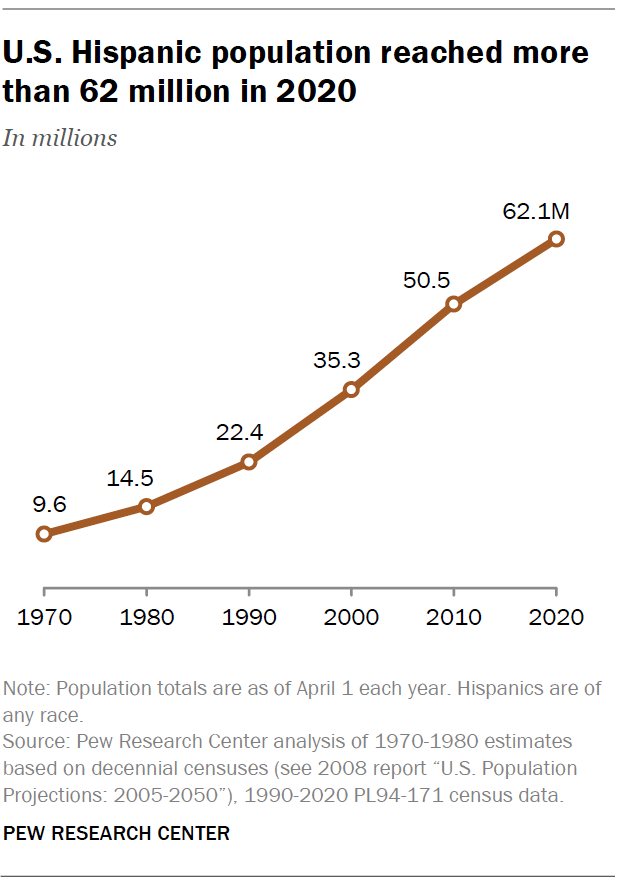
With that kind of population growth, which would’ve been on everyone’s radar by 2000, does it also serve “the interests of American capitalism and politics to expand the White category,” as it did with the Irish and Italians, to include people of Latin American descent? Thanks to widespread, deep-seated colorism, many people of Latin American descent will and have happily obliged, self-selecting as White.
Would that make Latin American immigrants and their children more likely to be accepted in the U.S.? It worked for the Italians and Irish, after all, though it hasn’t worked as well for people of Middle Eastern or North African descent. Even if it did work, however, it would perpetuate the same destructive ideal of Whiteness as source of aspiration and as a skeleton key. If being White gets you in the door, is it a room worth being in?
So, am I White? It depends on who you ask. What I know is that my family’s from Argentina, I grew up in New Jersey, I went to Boston College, and I live in France. The rest is pseudo-science and political jockeying.
In other words, All American!
You might find this book interesting: https://press.princeton.edu/books/hardcover/9780691179469/white-freedom?srsltid=AfmBOopnfsfNbs_8nx63suCwxtCgTdEJyizTqfRXCgsu44kbj7Vy8MfM
I met the author, sadly now deceased, in Paris a few years back. I have a copy if ever you want to peruse.