
Found License, Lost Citizenship
This week in France.

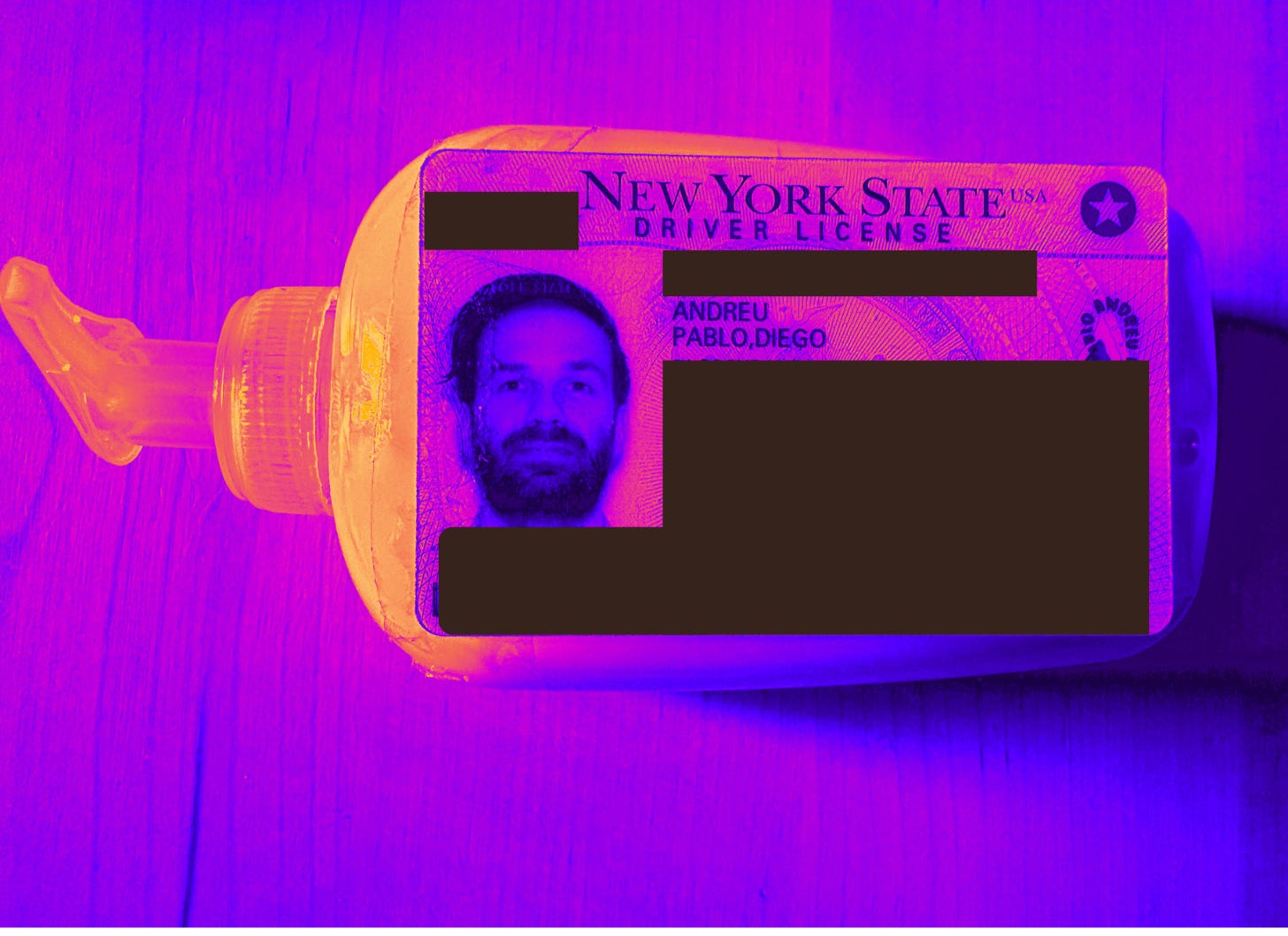
While checking out at the cash register of my local convenience store in Versailles yesterday, the shop owner handed me a bottle of hand soap with my driver’s license taped onto it.
My brain did not compute. How did he have my license? Why was it taped onto hand soap? Was this David Blaine disguised as an épicerie owner for an international reboot of street magic?
My wife Daniela and I had just gotten back to Versailles from Grasse in the south of France, where we had spent six weeks, and now, on day one in Versailles, some guy was returning my ID.
Through pantomimes, he explained that I had dropped my ID in the store two months ago. I never noticed. Daniela called it “such a Pablo story.” What she meant was that I don’t worry about “little” things because they always seem to work out for me. I think it has more to do with how worrying about nuclear war and the theoretical end of the universe drowns out noticing a lost driver’s license, but I suppose it’s six of one, half a dozen of the other.
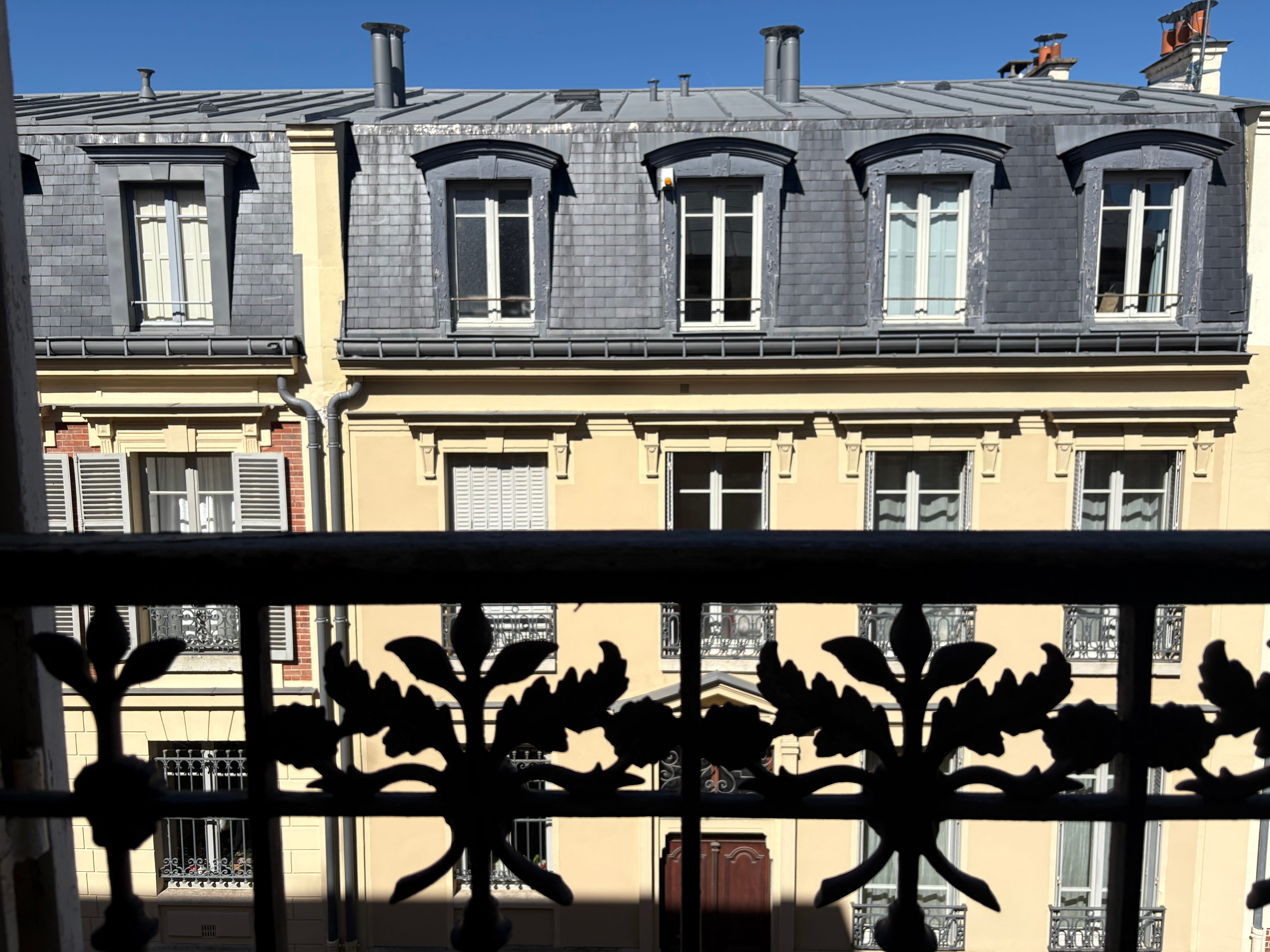
Upon return, Versailles felt familiar, like our neighborhood. The old wooden death trap of a playground. (The splinters those kids must have!) Our boulangerie, with the best baguettes and the unsmiliest people. Our street, with the pastel yellows and slate grays. Our apartment, the one that had been our home for four months while we acclimated to France. Our mugs were still here—mugs we had painted at a coffee shop-cum-ceramic painting space while surrounded by children and their parents (and the odd couple). Our laundry bag was still in the apartment. We could tell no one had stayed here while we were gone since a lot of the items we’d bought were unused: paper towels, olive oil, etc. It felt like we were coming back home. And yet, it was bittersweet.
We made friends in Grasse, something we’d never managed in Versailles in more than double the time. The people are warmer down there. We wondered if climate had anything to do with it. Or maybe it was a small town versus big city thing. Whatever the case, people were friendlier and more open in Grasse.
A cafe located in a cave—not cave as in bear but the French “cave” meaning cellar, as in those sepulchral stone cellars for wine—became our go-to lunch spot, first because of the simple, fresh, 1990s-priced lunch fare, and then because of the loveliest mother-daughter duo (say hello to Ana and Sonja at Edelweiss from Daniela and Pablo if you’re ever in Grasse) that made us feel like we were visiting the home of a family friend. Daniela and I had lazy late lunches there. We met up with friends there. On long workdays, I picked up sandwiches and salads to go. On slow days, I’d go there when Daniela was at school and read a book while I had a long lunch.
On those days, I spent more time talking with them than reading my books. They were curious about the U.S. and New York. I was curious about France, Paris, where they’d moved from, Grasse and their motherland, Serbia. We shared our life stories with each other filtered, as always, through language and culture—all while a playlist of France Gall, Julio Iglesias, Artemas, Carol G, Luc Plamendon and Riccardo Cocciante played in the background.
When we left, Daniela gave them a present, a perfume she had made in a perfume laboratory in Grasse, and a postcard with our contact information, some of which lay taped behind the cash register of a convenience store 600 miles away.
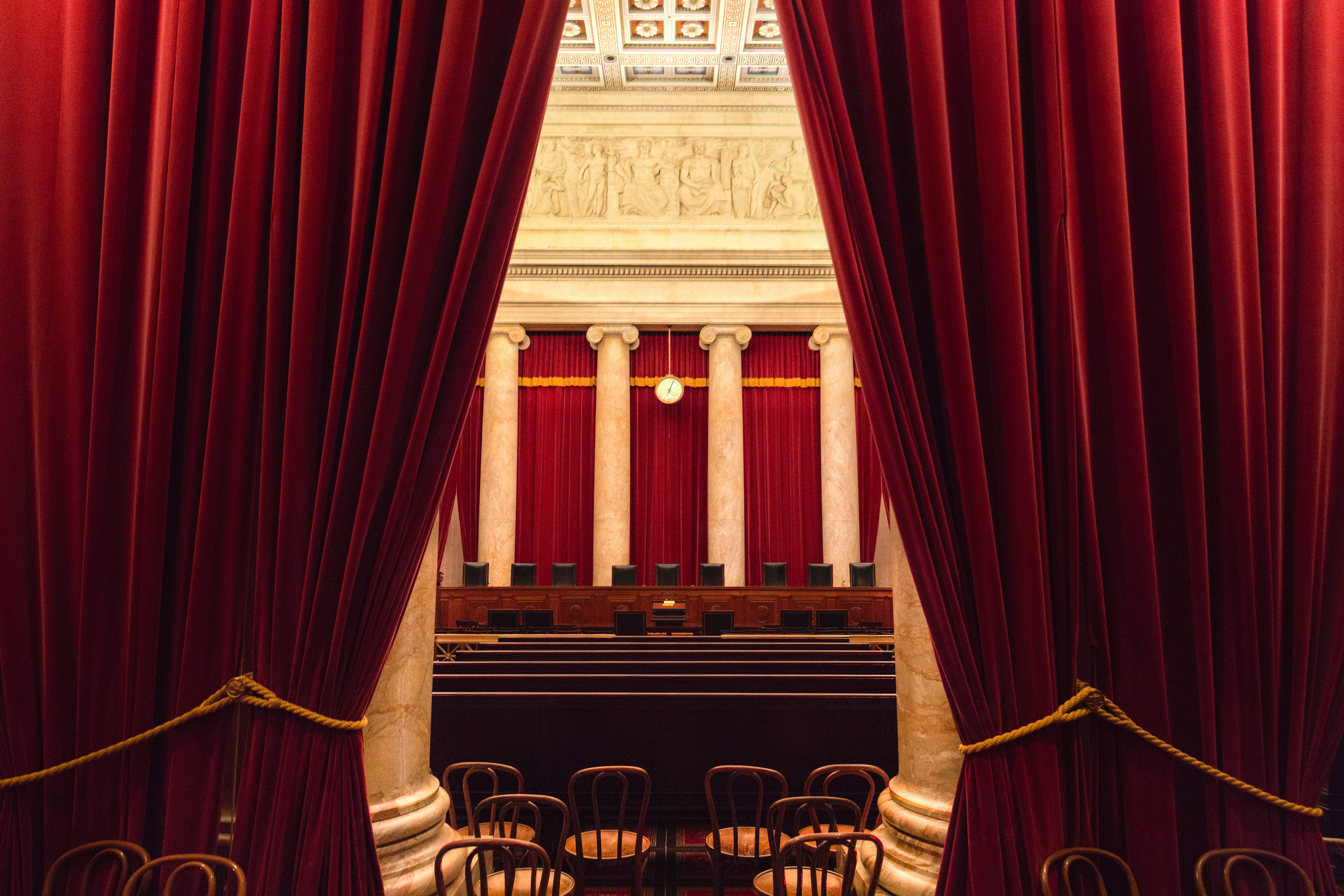
About a week before I recovered a license I didn’t know was lost, Donald Trump was almost certainly dozing off in the most important courtroom in the United States. His presence, a presidential first, was a bald attempt to intimidate Supreme Court justices into ruling in his favor concerning his executive order to end birthright citizenship, the mechanism by which I and millions of others became U.S. citizens.
Though Trump’s executive order wouldn’t apply retroactively, civil rights groups and legal watchdogs warn that an administration that prioritizes denaturalization can’t be trusted to adhere to the current stipulation. During oral arguments, Justice Sotomayor contended that Trump’s EO could be used to annul existing citizenships. The EO, as now constructed, only applies to those born after the order takes effect, but if Sotomayor is worried, I’m worried. Even the whiff of possibility of retroactive removals is, well, it’s fucking crazy.
Take me as an example: I’m a middle-aged man who was born and raised in the U.S. If my U.S. citizenship were revoked, I would retain the citizenship of my parents’ country of origin: Spain. So, in my mid-40s, speaking so-so Spanish, I would move to a country I’ve been to twice, where I have no friends and no prospects. Could my parents have done things better? Sure. Does it warrant my removal decades later? Of course not. Do I think that will happen? No. But I also didn’t think masked men would murder U.S. citizens in broad daylight, so I guess we’ll see.
Here are a couple of other pieces I’ve written about U.S. citizenship developments for other publications:
Salon: “My citizenship, up for debate” (April 4, 2026)
Slate: “The Attack on Dual Citizenship is an Attack on Me” (December 17, 2025)
NOTE: Some of the articles I publish in other publications are paywalled. As the author, I retain static copies of the articles. I never gate my articles on this newsletter, but a paid subscription to ¿401 Que?, in addition to supporting my independent writing and a few other benefits, gives you access to my paywalled writing elsewhere.
Did you like this piece? Share it with your friends. It’s free to read.