
What the U.S. Can Learn from Hungary About Getting Rid of Dictators
Orban was voted out in the spring, but work remains in Hungary.

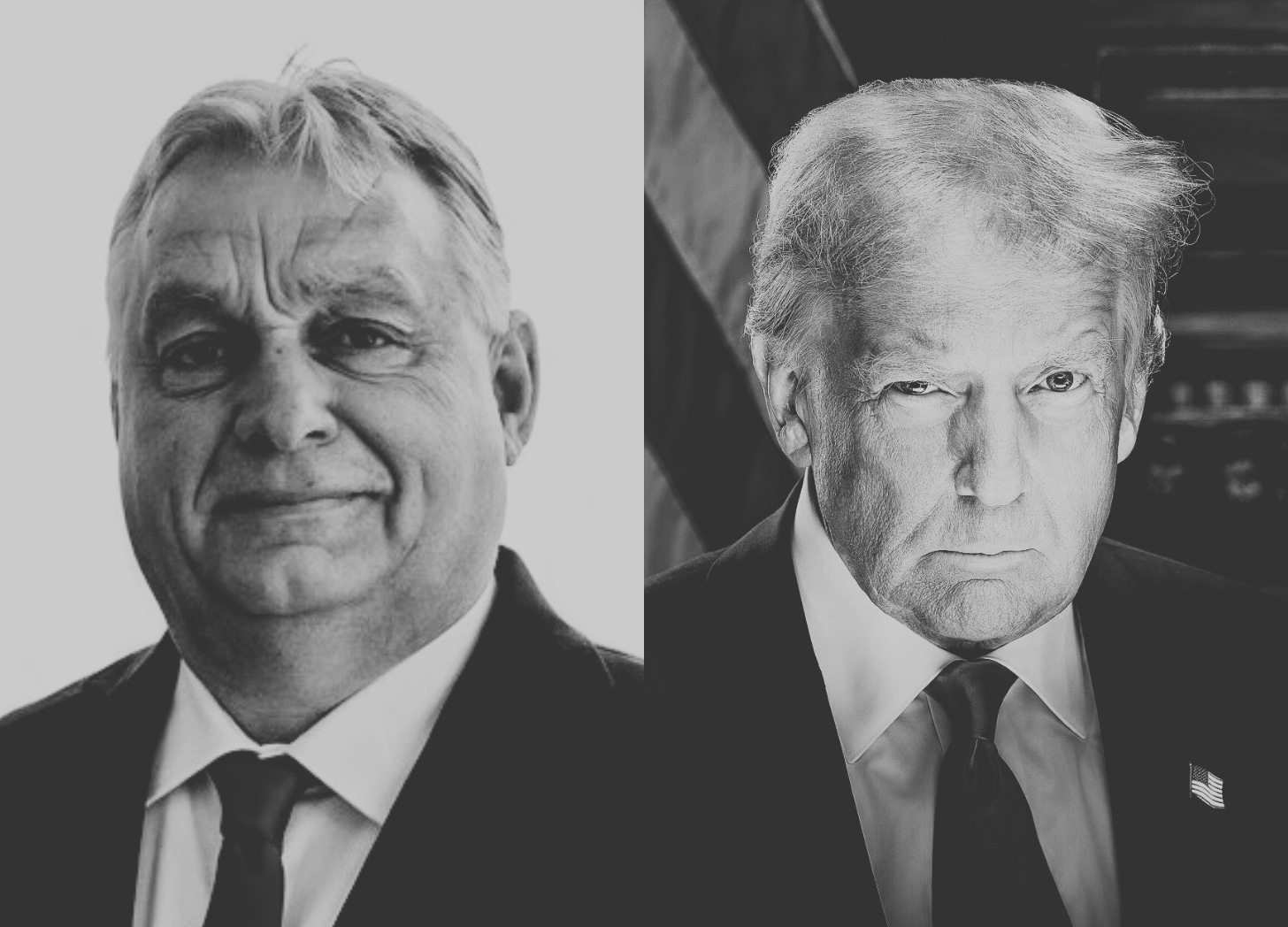
Two months ago, my wife and I came to Budapest to do some recon for a potential move. We arrived three days after Péter Magyar took his oath of office as prime minister of Hungary, ending the 16-year rule of Viktor Orbán.
Now, three weeks into a three-month stay in Budapest, I learned that the Hungarian parliament voted to remove President Tamás Sulyok, who is widely considered to be an Orbán toady.
Prime Minister Péter Magyar's Tisza party flexed its two-thirds majority to invoke the 17th amendment to the constitution to get rid of Sulyok, Péter Polt, the head of the Constitutional Court, Constitutional Court judges older than 70, and deputies who have served three terms (barred from running again). The move decimates Orbán’s Fidesz party.
Beware when fighting the monster…
In his second term, which stretched unnaturally for 16 years thanks to some political fuckery, Orbán leaned into the quid-pro-quo style of governance characteristic of every corrupt government.
A lawyer by trade, Orbán used his knowledge to systematically dismantle the guardrails of democracy: He consolidated domestic media into a foundation run by his allies (KESMA), weakened the Constitutional Court, cued up EU contracts for his oligarch buddies, and installed his cronies across the government, effectively creating a mafia state.
Orbán was a dictator.
And yet, some fear that the current prime minister has gone too far in his quest to root out Orbán loyalists. There’s a thin line between the removal of corrupt officials and political recriminations, between repairing the pillars of democracy and rushing a nearsighted solution.
Benjamin Ward, deputy Europe and Central Asia director at Human Rights Watch, had the following to say:
“Hungary’s new government has a mandate to set right the damage done to the rule of law during 16 years of Fidesz rule, including reversing its arbitrary stacking of key state institutions with Fidesz loyalists. But restoring the rule of law requires respecting due process and taking time to ensure genuine consultation before enacting sweeping constitutional changes.”
How this critical transition in Hungary shakes out remains to be seen, but the U.S. needn’t wait for that eventuality to glean insights for its own struggles with a weakening democracy.
Lesson #1: The dictatorship doesn’t end with the dictator
When North Korea’s “Supreme Leader” Kim Jong Il died, his son, Kim Jong Un, picked up right where his dad left off. Dictators are able to consolidate power by promising power and riches to those who pledge loyalty to them above all else. Such a corrupt, self-serving network doesn’t spring up overnight, and it can’t be uprooted overnight either.
Magyar and the Tisza party understood that Orbán’s rule didn’t end with him. His acolytes were still out there. Lopping off the head of the snake was not enough. When Trump’s presidency ends, the Republican party’s fascist turn is not undone. Project 2025 doesn’t disappear. Dark money in politics remains. The plutocrats, technofascists, and puppeteers behind Trump will keep conspiring. Ridding ourselves of Trump is but one component of a treatment plan to which the U.S. has never adhered.
Lesson #2: The difference between reform, revenge, and justice
The concern about Magyar overstepping is understandable. Hungary doesn’t want to jump out of the frying pan only to end up in the fire. The focus should be on restoring checks and balances and reinforcing public institutions.
One of the biggest lessons of the Trump presidency, particularly the second term, is how much of what limited presidents historically has been political decorum. Sure, we have checks and balances, but if a president is willing to flout court orders, race through executive orders that challenge the Constitution, and empower federal agencies to do one’s bidding at the expense of due process and rule of law, then we have to reexamine the interweaving dynamics of the systems that adjudicate and enforce the laws of the land, including U.S. Marshals, immigration courts, the Supreme Court, presidential appointees, executive orders, and on and on and on.
It’s also important to differentiate between political vendettas and prosecuting crimes. The opposition will always cry foul, just as Magyar and his party are seeing, but under any regime, crimes are committed. They must be prosecuted lest other bad actors feel emboldened to do the same in a future administration. For example, ICE cannot get away with killing innocent people. If they do, we collectively accept state-sanctioned murders. Agents and those that empowered them must be prosecuted.
Orbán didn’t start out as a dictator. The other day, my wife made conversation with a taxi driver, who confirmed as much, saying that in the beginning, things weren’t OK. Were there perceptible signs of what he would become in the beginning? I don’t know, but by the time people got up to speed, it was too late, at least until this past May.
Trump’s consolidation of power is not as advanced as Orbán’s was, but what if his jokes about a third term ended up being not so jokey? He’s older, though. The specter of the further unification of executive power in the U.S. lies not with an old, visibly tired man. It lies with someone we may not even know yet.
Trump’s second term was more destructive than the first, and if we fail to heed the lessons of our fall into authoritarianism, Trump’s spiritual successor will be far more dangerous than Trump ever was.
Author’s note:
I don’t paywall my writing, but writing is how I earn a living. If you appreciate my work, consider becoming a paid subscriber. If you want to know a little more about the newsletter or my credentials before subscribing, take a look at my About Page.
Thank you for reading.
— Pablo
Related stories:

What Does the Beginning of a Dictatorship Feel Like?

Lately, I’ve been thinking a lot about what the beginning of a dictatorship feels like. What did it feel like in Russia? What did it feel like in Hungary? Is it happening in the U.S.? How would we know? I’m Still Here, winner of the Academy Aw…
Good to see that Hungary’s has kicked Orban out of govt. 16 years….with a fascistic Orban as Pm.